
Advancing the unification of probability, curvature, and quantum emergence through Entanglement Compression Theory (ECT).
Committed to open access to knowledge – not centralized ownership.
Singularity → Galaxy Formation
Late-Time Baryonic and Hydrogen Dynamics
This page presents the second major numerical result of the Primordial Wave Equation (PWE) program. Building directly on the stabilized compression singularity produced in Stage-1, this simulation introduces baryonic matter and hydrogen as late-time, asymmetric flows interacting with an already formed compression geometry.
No new governing equation is introduced. The same PWE and compression functional remain active throughout. What changes is the physical content of the system: baryons are injected as structured streams with distributed impact parameters, and hydrogen cooling is enabled only after the compression field has fully stabilized.
This simulation begins from the final stabilized output of Stage-1: Dark Halo Formation, where a self-binding compression halo and singularity emerge from the Primordial Wave Equation without baryons or cooling.
Key Evolution Frames
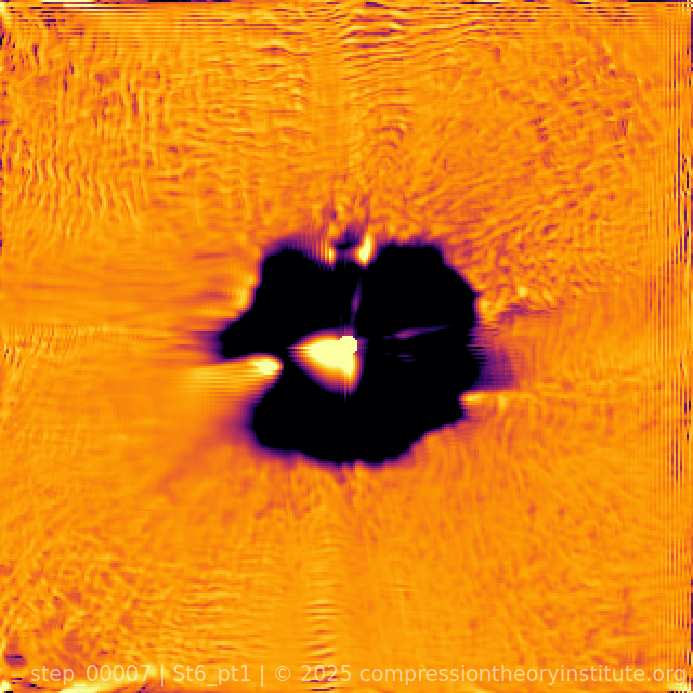
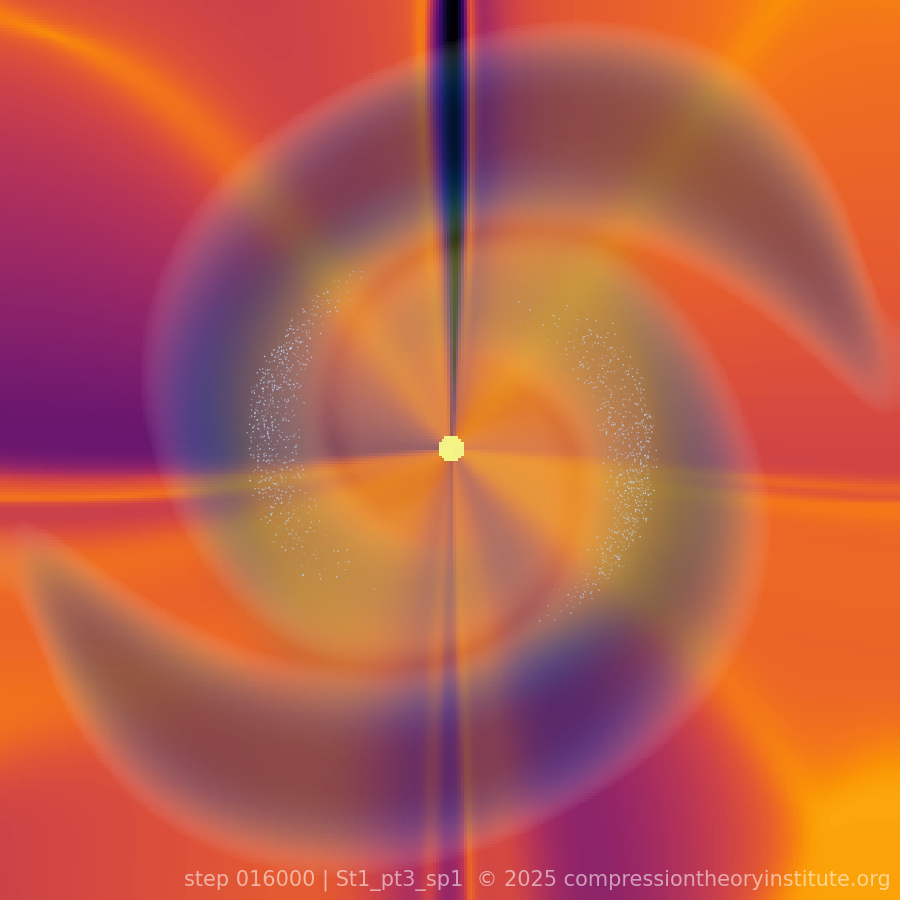
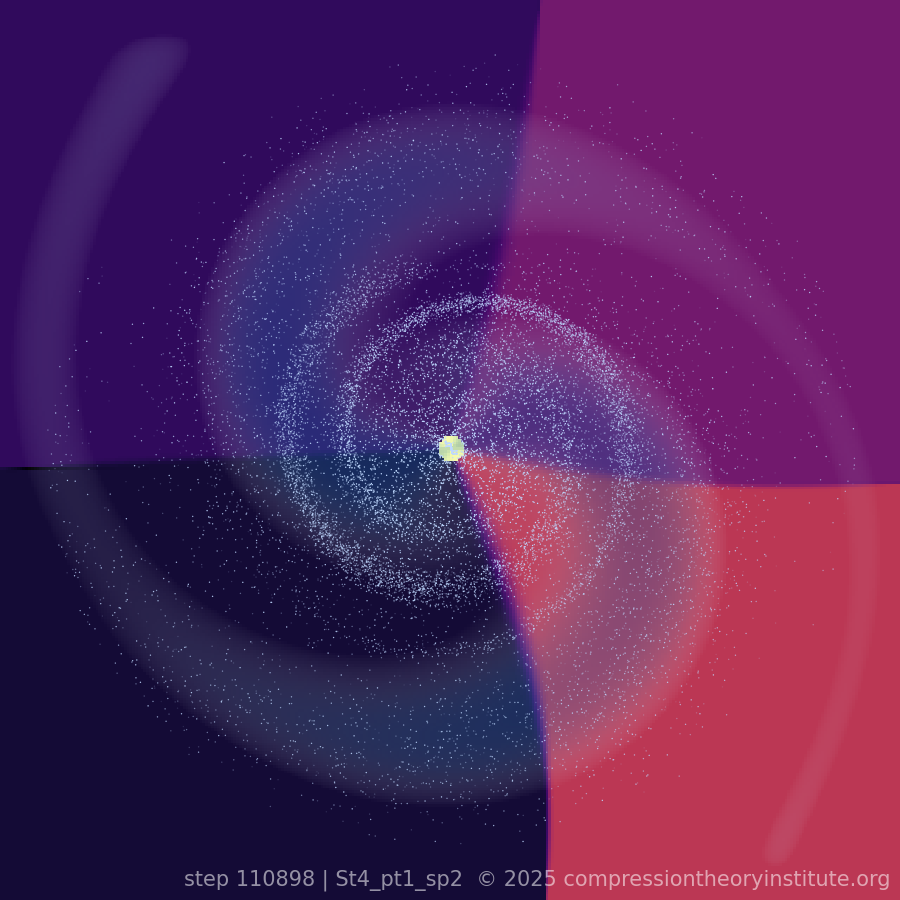
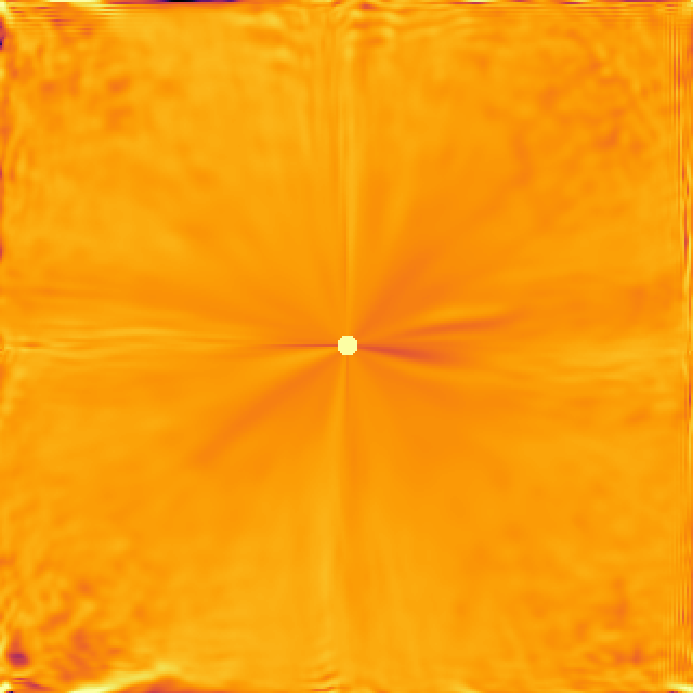
From left to right: a purely compression-supported mathematical singularity; the same geometry after baryonic and hydrogen fields are introduced; the emergence of a sustained spiral galaxy with star formation; and the baryon-free end state shown for direct comparison. Together, these frames isolate the role of baryons and cooling in transforming a stable compression structure into a visible galaxy.
Full Singularity → Galaxy evolution (MP4)
Video shown for continuity. Canonical results are defined by the still frames and parameter-logged runs.
Physical interpretation
The critical result demonstrated here is that spiral galaxies do not require a separate collapse prescription, turbulence model, or stochastic forcing. Once a compression singularity exists, asymmetric baryonic inflow combined with hydrogen cooling is sufficient to generate sustained spiral structure.
Star formation in this simulation is not imposed by hand. Star tracers emerge from regions where baryonic density, compression curvature, and cooling thresholds coincide. Angular momentum is redistributed through scattering and dissipation, not global disk condensation.
In short: halos form first, singularities stabilize next, and galaxies emerge last as a dynamical consequence of late-time matter injection into an already structured compression field.
Relationship to Stage-1
This simulation uses the final stabilized output of the Stage-1 dark halo collapse as its initial condition. No re-tuning or re-normalization is performed between stages. The transition from halo to galaxy is therefore continuous, not procedural.
Together, Stage-1 and Stage-2 demonstrate a complete compression-first pathway from an oscillatory field to a singularity, and from a singularity to a spiral galaxy, within a single deterministic theoretical framework.